

Quick Summary
You need a tape measure, ladder, pencil, and paper. Start by measuring each roof edge where water runs off. Add all those numbers together to find your total linear feet. Check your roof pitch and mark downspout spots. This simple process stops water damage. The right numbers help you order seamless gutters that fit perfectly the first time.
Getting a perfect gutter fit begins the moment you learn how to measure your home’s gutters. Guessing at lengths causes leaks, sagging sections, and costly water damage around your foundation. A simple measuring plan secures your home against heavy rain and keeps your dry spaces safe. You can trust our guide for clear steps. For hands-on help, our gutter experts in Marietta, GA handle every job with care.
At American Chimney Gutter & Roofing, we make home protection simple. Our team brings deep experience in precise gutter installation in Marietta to every project. We use your correct measurements or measure for you, cutting waste and stopping future problems before they start.
Tools You Need to Measure Gutters
Gather a few basic tools before you climb the ladder. You need a 25-foot steel tape measure for long, straight edges. A pencil and notepad record every number without relying on memory. Use a sturdy extension ladder that reaches your roofline safely. Finally, a chalk line marks long fascia boards.
How to Measure for Gutters Correctly
Correct measuring starts with a simple walk around your entire house. You sketch the roof shape from above, marking each straight edge where water falls. This bird’s-eye view tracks every section needing gutter protection. Break your roof into simple lines for easy math. Follow these four key steps for an accurate plan.
- Measure the Length of Each Roof Edge: Place your ladder on firm, level ground at one corner. Hook your tape measure onto the fascia board and pull it straight along the edge. Write down the exact feet and inches for that section. Move your ladder safely around the house and repeat for every straight run.
- Calculate the Total Linear Feet Required: Add every measured roof edge length together on your notepad. This final number gives you the total linear feet of gutter material needed. Order slightly more material than this sum for end caps and cutting waste. Seamless gutter machines use this total to cut continuous lengths.
- Determine the Correct Gutter Size: Most homes use five-inch K-style gutters that handle ordinary rainfall. Steep roofs or heavy storm areas may need larger six-inch troughs instead. Look at your roof’s pitch and your region’s maximum rainfall intensity. A larger size moves more water quickly during sudden downpours.
- Count the Number of Inside and Outside Corners: Walk around your home and count every spot where two gutters meet at an angle. Inside corners turn inward like a valley while outside corners point outward like a peak. Each corner requires a special mitered box or seamless corner piece. Your order needs the exact count for a leak-free connection.
How Do You Measure Gutters for Downspouts
Proper downspout placement pushes water far from your foundation walls. A downspout handles the flow from about 30 to 40 feet of gutter run. Badly placed downspouts cause overflow during storms. Follow this checklist to add drainage power to your plan.
- Measure the Roof Pitch for Proper Drainage: Hold a level horizontally against the roof and measure the vertical rise over 12 inches. A steep pitch sends water rushing faster into your gutters. This speed demands wider downspouts or extra drainage outlets. Flatter roofs drain slower but still need correct downspout sizing.
- Identify Where Downspouts Should Be Placed: Walk the perimeter and mark spots that slope away from your foundation naturally. Place a downspout every 30 feet maximum to prevent gutter overflow. Corners make natural collection points for falling water. Avoid dumping water onto walkways or driveways that freeze.
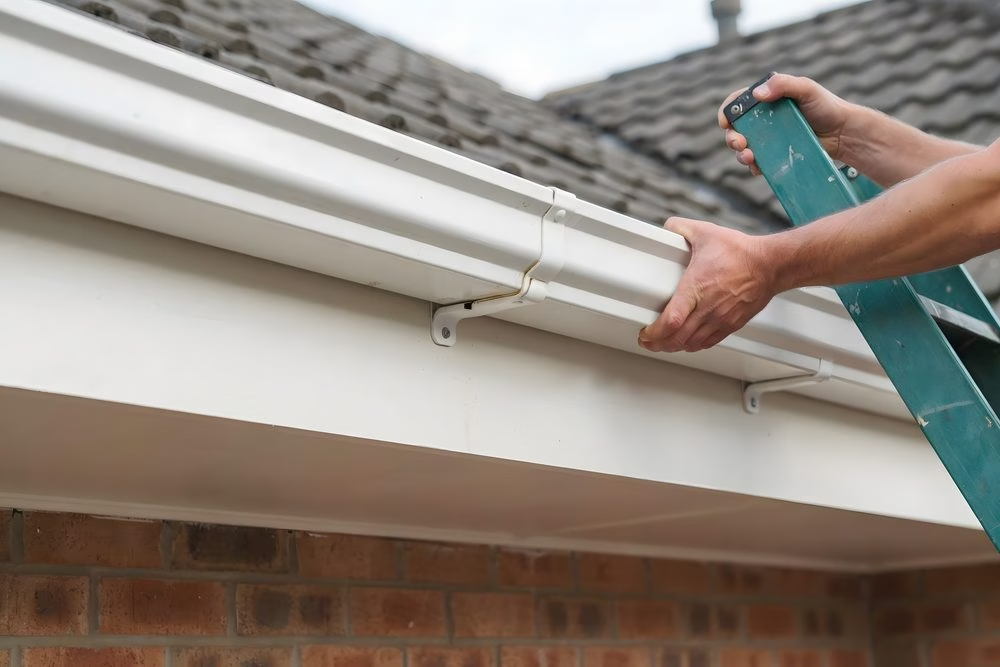
- Account for Gutter Hangers and Brackets: Hidden hangers screw into the fascia behind the gutter trough for a clean look. Space these brackets every two feet along the entire gutter length. Closer spacing gives more strength in areas with heavy snow and ice loads. Strong support keeps gutters from pulling away from your home.
- Record Measurements for Seamless Gutters: A seamless gutter truck rolls a flat coil into one continuous trough at your home. Give the installer your precise linear footage for each straight section. Write down the exact lengths with no seams breaking the run. The machine cuts downspout holes right at the marked locations.
- Plan for Splash Blocks and Extensions: Splash blocks sit under downspout elbows to spread water across your lawn. Extensions carry the water even farther from your foundation to a safe slope. Measure the distance from your home to the ideal drainage point. This addition stops soil erosion right at your wall.
Common Mistakes When Measuring Gutters
- Forgetting to Check Fascia Board Condition: Rotten fascia boards cannot hold screws or hidden gutter hangers firmly. Inspect the wood behind your old gutters before ordering new ones. Soft or crumbling wood needs repair or replacement before installation day. Sound fascia creates a solid anchor for all gutter hardware.
- Measuring Only One Side of the House: Many people measure the front of the home and multiply by two. Roof lines are rarely perfect mirror images on all four sides. Each wall length often differs by several critical inches. Measure every edge individually and record the numbers immediately.
- Ignoring the Slope Requirement for Drainage: Gutters must slope slightly downward toward the downspout outlet or water stands still. Aim for a quarter-inch drop for every ten feet of gutter run. Standing water breeds mosquitoes and rusts through steel gutters fast. Mark your fascia with a chalk line showing this gentle slope.
FAQs
What Length Tape Measure Works Best?
A 25-foot or 30-foot steel tape measure gives you the reach for most home sections without sagging. Fiberglass tapes stretch and give false readings over time.
Can I Measure Gutters Without a Ladder?
You cannot get accurate fascia board lengths without climbing up close. Walking on the ground leaves gaps in your numbers and hides wood rot problems behind old gutters.
How Do You Measure a Curved Roof Edge?
Break the curve into small straight sections and measure each one separately. Add all the short lengths together for the total curved section length.
Is Roof Pitch Important for Gutter Size?
Yes, a steep roof pitch collects and shoots water into the trough much faster. Steep slopes often need six-inch gutters instead of standard five-inch ones.
Your Home Deserves American Chimney Gutter & Roofing’s Proven Protection
As a licensed roofing contractor in Georgia, we fortify homes with precision inspections and lasting repairs. When water sneaks past failing systems, our gutter repair or replacement in Marietta service reroutes trouble before foundations crack. American Chimney Gutter & Roofing brings 25 years of licensed, insured, BBB A+ rated craftsmanship straight to your doorstep.